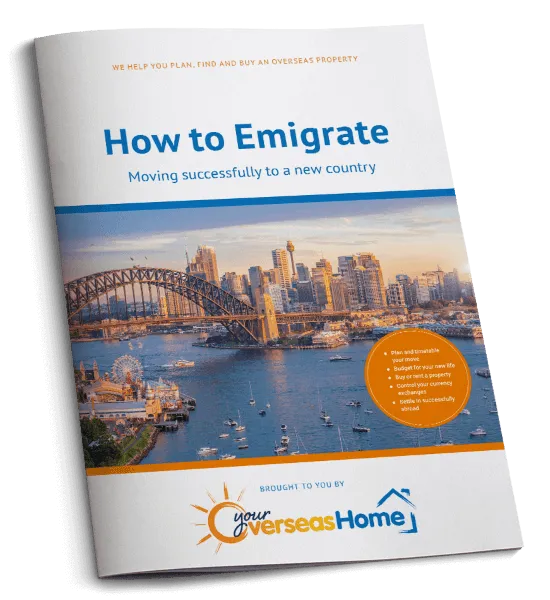
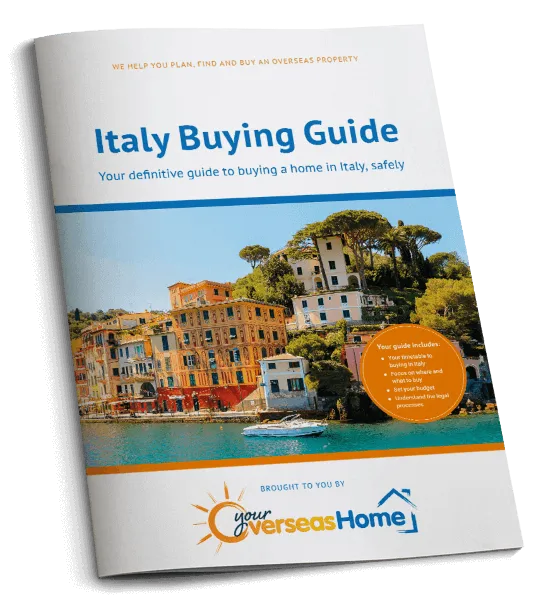
Get Your FREE Mini Version
Emigration Buying Guide Now

Mini version - comes with
newsletter alerts!
(Fill out your details below)


Emigration Guide Monthly Newsletter
September 2010

(if you don't already receive a monthly announcement that our Emigration newsletter has been published, you can sign up to our list here - you will also receive a free mini version Emigration Guide)

In This Month's Issue You'll Find:

Message from Carol

Setting up a bank account abroad

Can you afford to lose £4,000?

Renting out your property in the UK when you move abroad

Are you sure you are covered?

What can the OGC Resource Centre do for you?

Buy the Guide: Let me help you plan your property purchase...

That’s it for another month…

Hello again.

Is it just me or does the countdown to Christmas seem to start earlier every year? I was appalled to read that Santa Claus made a guest appearance on the 8th of August at Harrods - on a zebra no less. Has Rudolph retired I ask myself? Seriously, I think it’s kind of sad that the whole Christmas celebration is being turned into a commercial opportunity – what do you think?

Anyway, that apart, I am really excited! My closest friend from South Africa is coming to stay a couple of weeks with me. And the beauty of London is that there is just so much to do! On the ‘events list’ is a play with actor Martin Shaw (we love him!) plus a trip on my friend Jane’s narrow boat from Windsor to Hampton Court…what could be more fun?

So…what’s the new on the emigration front?

More and more people are deciding to leave the UK, for what ever reason. As we have frequently discussed, this is something that needs to be well thought through and it appears that the chief concern of most people who do decide to take this step is healthcare. Having lived most of my life in a country where free medical care is hardly an option I can understand this concern and indeed would place it top of my own list of importance.

Many people decide to leave the UK and set up home abroad with very little knowledge of the quality of healthcare offered in their new country. Data shows that around half of people moving abroad do so for work, and a large percentage of the remaining half move abroad to retire. Both groups need to know exactly what the differences are between private and public healthcare systems and have appropriate medical insurance in place to help ensure a successful start to their new life abroad. This of course is just one of the very many things that need to be well thought through – you may find my Emigration Guide of use here: go to http://www.emigrationguide.com/guide.htm for your copy, which discusses the whole process and its many attending concerns in depth.

This month I am outlining the process of setting up a bank account overseas, chatting a bit about renting out your UK home out when moving abroad and you will find words of wisdom from Smart Currency’s Charles Purdy.

Enjoy and do contact us at the OGC Resource Centre if there is anything you would like help with in the property purchasing process abroad. Even if you want to just chat about your plans the team are always happy to lend an ear! Call them on 207 898 0549.

Best and warmest of wishes,

Kind regards,

Carol

Carol Dunning
The Overseas Guides Company Limited.
mailto:Emigration@OverseasGuidesCompany.com
Phone 0207 898 0549
1, Lyric Square,
London W6 0NB


Setting up a bank account abroad

Whether you are emigrating permanently or just testing the waters, frankly it is much easier and ultimately cheaper to open a basic current bank account in the country that you are living in.

Certainly there may be a few differences to what you have been used to, in service and in charges perhaps, but there are no obstacles to someone from the EU opening a bank account in another EU country as long as you have documentation that proves you are an EU citizen and are resident in an EU country. This also applies to most countries. Generally speaking, you can just walk into your most convenient bank and ask to open an account – providing that you remember if you are in a tiny town in Lithuania or a rural village in Portugal you may need a translator and you may have to make an appointment to see someone!

You may have to accept that banking abroad may be different – but hey, that’s why you’re moving isn’t it – for just those changes and differences? Be prepared for far more paperwork than you may be used to, some seemingly strange questions and some delays.

It’s always best to open a bank account in person rather than by correspondence from abroad - a good and personal relationship with your banker can open many doors. How to choose which bank to use? A comparison of costs is essential, plus you may want to get input from neighbours or colleagues as to where they bank to find the best service and charges – personal recommendations are always good.

At the start, due to current international laws relating to money laundering, you may have to jump through a few hoops to prove that you are who you say you are. You know you only have a tiny deposit but your bank has to be sure that you’re not an international criminal intent on laundering billions – I wish! Normally you must be over 18 and provide proof of identity (for instance your passport), your address in your new country and some countries require a fiscal or a tax number.

You may also be asked for marriage certificates, birth certificates and copies of recent bank statements from your previous bank. Remember to keep all these documents readily accessible in case they are needed. In the Emigration Guide I give a whole list of documents that it’s wise to have to hand: if you would like to check the guide out, go to http://www.emigrationguide.com/guide.htm

In some countries of course it’s a little harder than others, and you may need local referees and evidence of character or residence qualification. In the USA for instance it has become far more difficult to open a bank account since 9/11. The Department of State has been contacted by numerous individuals who say that, under the USA Patriot Act, their U.S. bank accounts have been closed or that they have been prohibited from opening an account due to foreign citizenship or a foreign address.

Actually the USA Patriot Act does not prohibit foreign citizens or individuals with foreign residences from opening or maintaining a U.S. bank account. Financial institutions must however implement reasonable procedures for verifying the identity of any person seeking to open an account, maintain records of the information used to verify the person’s identity and determine whether the person appears on any list of known or suspected terrorists or terrorist organisations. The bank also needs to exert enhanced due diligence to determine the owner and the source of funds deposited into private banking accounts, but apart from that there is no legal reason you should not be allowed to open an account.  

In addition, foreign individuals are generally required to provide a government issued number that is similar to a social security number.

Sometimes the costs associated with banking abroad comes as a nasty surprise - by comparison, banking charges in the UK are still relatively cheap or even free in many cases. I remember thinking that when I came from South Africa – there I had to pay for a slew of things not charged here. For instance, in many overseas countries every time you make a cash withdrawal from an ATM, order a statement or use another bank’s ATM, a small charge is made by your bank…and these small amounts have a nasty habit of mounting up!

Remember too that in many countries abroad facilities don’t come automatically with your current account. Things like a card to use at an ATM and an overdraft facility have to be arranged and are sometimes charged for separately.

Cheques are regarded differently in some countries and are still much used and accepted in many parts of the world. In Portugal for instance giving a cheque is legally the same thing as offering cash. It is a criminal offence to write one out without sufficient funds to cover it and you can be charged with fraud.

In some countries the law demands that banks enter the details of anyone who writes a ‘bounced’ cheque onto a central database – in effect meaning your cheques are unlikely to be accepted by anyone anywhere in that country again.

In Australia you can open an account with some banks over the phone, but in order to withdraw funds you need to present yourself personally and collect your cards. You may also not be allowed to access Internet banking until you have been personally identified. When you arrive in the country and go to the bank with your passport etc, you will get your cards and the account will be fully activated.

Usually it makes sense to keep your UK personal bank account open – it means that you will not have to go through the hassle of applying again for an account if you decide to return to the UK. By retaining an account you have some form of official presence in the UK when it comes to re-establishing your credit rating. Also you may well find that you still have financial obligations in the UK even after you move abroad, a family member for instance, a house you are renting out, perhaps money for holidays that will be spent back in dear old Blighty and it will cost far less to have cash on hand rather than to be transferring it to and fro.

The only time it may make sense for you to close your UK bank account is if you are attempting to change your country of domicile from Britain to wherever you have expatriated to and taken up residency.  You may have to prove you have severed all ties with the UK if you want to turn your back on your status of British domicile – therefore you are likely to be told to close your bank account. 

And lastly, you would be well advised to transfer your funds from the UK abroad - and back if needs be - via a currency company like Smart Currency rather than your high street bank. This is a far cheaper option than the banks will give you, both in terms of bank charges and better exchange rates. Give them a call on 0207 898 0541 and have a chat about this. 

The OGC Resource Centre does have services that they can recommend to you so please give them a call if you require help. These are property professionals they we at the OGC have either personally sourced and/or checked or companies that come highly recommended by other OGC readers. This is a free service and you are under no obligation to use them so why not give it a try? You have nothing to lose. The number to call is 0207 898 0549 or fill in our OGC Resource form at: http://www.EmigrationGuide.com/resources.htm


Can you afford to lose £4,000?

The economic crisis is certainly causing problems for people all over the world, yet in the world of international money transfers there are actions that can be taken to safeguard your money – especially if different currencies are required. International payments include payments between countries for property, the movement of pension payments, transferring savings or paying for any goods or services in a currency other than the one you have. Working with an international payments specialist rather than using a bank will allow you to save money over using the bank AND provide you with options that can minimise financial losses.

Moving Large Lump Sums of Money Internationally
Do you need to pay a staged payment for a property? How about moving funds from the sale of a property abroad back to the UK? Regardless of the reason for moving money – or where you need to move it to - it’s important to realise that for every £/€100,000 you move, you could pay around £/€4,000 unnecessarily if you use a bank. Banks around the world add a margin of around 4% more than the margin used by international payment specialist. Using a bank rather than a specialist is similar to buying a property and then asking if you can pay and extra £/€ 4,000 for no reason.

Apart from saving money on the cost of buying currency, you can also ensure that the value of the money you’re moving doesn’t change. In other words, if you need to move a large sum of money within the next year and you’re happy with the current exchange rate, you can reserve that rate today yet pay for it at a later date.

For example, during the month of January 2008 Mr and Mrs Kingston contacted Smart Currency Exchange to discuss a payment of €89,400 due in November 2008. The Kingstons were happy with the current rate of €1.317/£1 so they booked a contract for the full amount and simply paid a 5% deposit to secure the transaction. When November came, the Kingston’s sent the money due, less the 5% already paid. If however they had waited until November 2008 to purchase the euros, they would have had to accept a rate of €1.155/£1 and pay an extra £9,521.

Whilst the euro has lost ground since it was at parity (€1/£1) in December 2008, in the grand scheme of things it’s still a fantastic time to purchase or secure a rate for euros to sterling. So if you originally bought your euros at close to €1.50/£1 and you want to now bring the funds back, now is the time to think seriously about doing it - especially given that many analysts feel that sterling is likely to continue to strengthen towards €1.30/£1

Moving Small Sums on a Regular Basis
When moving small sums of money on a regular basis you can benefit greatly by fixing the currency exchange rate if and when the rate is at a good level. For example, in January 2008 many Brits living in the Europe secured a rate of €1.31/£1 for monthly payments for a year or two on all their pension payments. That means that as sterling weakened throughout the year, they were unaffected by the rate change and received a rate of 1.31 each month.

In addition to saving money on getting better-than-bank exchange rates and fixing rates for future use, international payment specialists can also reduce the fees associated with transfers, shrink the transfer times from 5 days to 48 hours and provide a level of service that far surpasses the cold, impersonal bank. As for safety, specialist organisations like Smart Currency Exchange are strictly regulated and process payments through a bank, negotiating a better rate of exchange with the bank and then passing the savings on to the client.

Visit Smart Currency Exchange at: www.SmartCurrencyExchange.com

It’s often the people that wait until the last minute that are forced into buying at the worst times – don’t let that be you.  Request a Quote from Smart Currency Exchange below or give a ring today to discuss your options! 

Smart Currency Exchange Quotation Form

Contact Smart Currency Exchange Ltd on (+44) 0207 898 0541 or visit them at: www.SmartCurrencyExchange.com


Renting out your property in the UK when you move abroad

Given that prices on house sales have dropped considerably in the UK, you may be wondering if your best bet may be to hang on to your property after moving abroad and then sell it later. It also means that if your move does not go according to plan you have at least not burnt your boats completely.

If you decide to keep your property and rent it out, then two more decisions are paramount:

Firstly, furnished or unfurnished?

If you are like me, then you want to take all your precious things with you. If you are like most other people, you will be delighted to leave them behind and completely refurnish abroad. First prize would of course be that you leave all your furniture in your home. You rent it out furnished and then, with the proceeds from the rental, you have enough to rent and buy new furniture abroad, and save yourself a bundle in shipping costs…but it doesn’t quite work like that.

Furnished properties need to be furnished to a very high standard, and all soft furnishings need to be certified as fire resistant. On top of that you may not get much extra rent on a fully furnished property. I know when I rented here in London the rent was the same furnished or unfurnished, so you may decide it’s not worth leaving all your treasures behind.

You do need by law to leave a few things behind for your tenants however; things like a stove, fridge, washing machine and garden tools/lawn mower if they will be looking after a garden..

Letting Agents
A letting agent will find tenants for you, arrange necessary maintenance, repairs and inspections, and generally look after your property. You’ll pay for the privilege of course – 10-15% plus VAT of the rent your tenant pay will go straight to the letting agent.

You do need to keep on top of things with your letting agent, for a number of reasons.

  • Letting agents, like real estate agents, are optimists – do your own research on what properties like yours are renting for
  • You need to make sure inspections are carried out, such as the annual gas safety inspection and regular (6-monthly) visits to your property by the letting agent
  • You need to read the check-in and check-out reports and compare them – your letting agent will probably rely on you to highlight problems
  • It can seriously affect your ability to pay your mortgage if your tenants are not making rent payments on time, or if your property is vacant for a while. Keep a contingency fund in the UK of around 3 months rent to cover such eventualities if possible. Keep in touch with your mortgage company if you do start having difficulty making payments
  • A letting agent may not pursue unpaid rents with as much vigour as you would like them to – you may need to step in and sort this out. I would insist on a monthly debit order: if your potential tenants balk at this – I would look for other tenants!
  • You will need to keep re-decorating your property to maintain a high standard of tenants – and remember that some tenants can do considerable damage in a short space of time
  • If you do think your house may be due for some redecorating, try to arrange for a friend or family member to look over the property with the letting agent – they may give you a clearer idea of what needs to be done
  • It is much better to keep a good tenant on a lower rent than it is to keep raising the rent – check-in and check-out inspections are costly, and you may have vacant periods between tenants. You’re also liable for council rates and utilities when the property is vacant. My parents lived in a rented home for years and never had the rent increased.  They however carried out all maintenance and repairs and left the house in a far better state than when they had first occupied it!
  • Read and understand the tenancy agreement you sign with the tenant – keep an eye especially on minimum notice periods. You can also specify a break clause, where you can ask to get the property back if you need it.

Despite the costs and hassle, most emigrants choose to use a letting agent rather than relying on relatives or friends to look after their property. There is quite a lot of paperwork involved, both for tax and ongoing things such as check-in/check-out inspections, and even to change utilities over between tenants – this could prove a nuisance for friends. There are also health and safety regulations for things such as fire alarms, extractor fans, boiler inspections, electrical inspections of appliances, and even requirements for fire escapes in some properties, all of which needs to be documented and kept up to date. There is also a lot of responsibility involved in choosing tenants and collecting rents. You don’t want to feel obliged to fly back to the UK when anything goes wrong.

You will need to let your house and contents insurer know when you are letting out your house, and may need to arrange special landlord’s insurance. The premiums may be a bit more than you are paying now, but you may be able to reduce your contents cover if you are letting your property unfurnished.

Make sure you understand the conditions of your insurance, especially if your property is going to be empty for a couple of weeks – you may need to get your letting agent to visit the property at set intervals and document their visit.

You also need to let your mortgage provider know if you are letting out your home. They may ask for a one-off extra payment or impose other conditions as they see fit.

Remember too that before you leave the UK, you’ll need to contact the HMRC to register as a non-resident landlord.

And finally, you need to make very sure that you can cover your costs with the rent you receive. The rental income needs to cover your costs such as mortgage (if applicable), insurance, maintenance, rental agency fees, change-over costs, provision for vacant periods, tax and so forth.

Good luck – and remember: the OGC Resource Centre is just a phone call away at 0207 898 0549. They have oodles of advice and recommendations that may just be the thing you need to make your property journey easier! You will be under no obligation to use their suggestions nor will it cost you anything.


Intasure

As an owner - or a potential owner - of a home overseas, you will already understand the importance of protecting your valuable asset. Until now it has been hard to find an insurer that provides comprehensive protection and the flexibility you need to cover your home abroad.  Luckily I have found someone who does all this – and more – they actually insure properties in more than 40 countries!  Whether you are actually living there or not, or even if you have let it out, their policies are designed to cover every eventuality.

If you would like more information on this please click on the link below or contact me at 0207 898 0549 and let’s have a chat. Last month alone no fewer than 25 people clicked on our insurance link and purchased insurance through Intasure – not a bad recommendation in one month alone!  Intasure


What can the OGC Resource Centre do for you?

Well…some would say it would be quicker to ask what they can’t do! Over the years, talking to hundreds of people about buying and investing in property abroad on a daily basis, there is very little they don’t know. They have covered just about every base - plus many own their own properties abroad too.

Over the years they have sourced a huge number of professionals who can help with the property process, both through personal experience and from recommendations received from other satisfied OGC readers.

You are welcome to give them a call at 0207 898 0549 – this is currently a free service and you are under no obligation at all to use their recommendations. Here’s what other happy OGCers have had to say:

“…Let me say how happy Philip and I are with your [OGC Resource Centre] service. You have opened so many doors for us….I like to take things one step at a time, to fully take on board every situation, but I could never have been prepared for the multitude of options that you have presented us with. …You can be sure that we will be using your recommendations because we are gaining more and more confidence in your company and that is all down to the interest you take and the advice you give.”

~~~~

"Hi, Having found the forum, subscribed to the free newsletters & purchased the Guide to purchasing property, it was amazingly easy using the tips & suggestions, to define my requirements & establish my strategy for what I really wanted. Then once introduced to the Guides Company's network of friendly, helpful associates, everything fell into place. And this despite some very attractive, but potentially risky, alternatives which I could have easily tempted into. However, I had a plan to keep me on track & knowledgeable friends to draw advice from. I have now successfully purchased a unique property, which I believe I will enjoy during my future retirement in a friendly to you, your colleagues & all your kind associates & their unique way of working. Best regards, Brian Dorey."

~~~

Just pick up the phone at 0207 898 0549 and the OGC Resource Team will be happy to help you. They are available Mon-Fri from 9am to 6pm.


Buy the Guide: Let me help you plan your property purchase...

The media is filled with doom and gloom, but just because the economic outlook is a little on the gloomy side it does not mean you have to postpone your plans to either buy a second home or move abroad. On the contrary, it actually couldn’t be a better time to buy, providing you do your sums correctly, buy in the right place and use reliable, professional people to help you.

Let the Guides help you with all this – and more. Every step is clearly and simply outlined, starting with the initial idea to buy all the way through to areas, how to buy land, investment options and many top tips. What is more, there’s a money-back guarantee if you don’t like the Guide so you have nothing to lose!!

The Guides are written by OGC staff members who know the countries intimately andin some cases own their own homes there. They cover Cyprus, France, Greece, Portugal and Italy plus there is a wonderful Emigration Guide that would benefit anyone thinking of moving abroad on a permanent basis. The Guides are utterly honest and take a straightforward, no-nonsense approach to the property buying process and all the other aspects that such a move will raise.

Here’s what Mark Welch wrote:

Hi there. The info that you've sent me has been absolutely invaluable. When I actually visited I had YOUR buying guide amongst other info of yours in my hands when I got off the plane. When I did the business side of the deal, it was YOUR guidelines I followed (to the letter in some instances) and that reassured me I was doing everything I could to protect myself. I can't thank you enough. Thank you, Thank you, and Thank you.

Regards,

Mark Welch

To get more information on each guide on offer, or to order your copy please select the country below:

http://www.CyprusBuyingGuide.com/guide.htm
http://www.GreeceBuyingGuide.com/guide.htm
http://www.ItalyBuyingGuide.com/guide.htm
http://www.FranceBuyingGuide.com/guide.htm
http://www.PortugalBuyingGuide.com/guide.htm
http://www.EmigrationGuide.com/guide.htm

You are also welcome to phone the OGC Resource Centre where you will find a team of friendly and helpful people happy to assist with yourqueries. The number is 0207 898 0549


That’s it for another month…

I so hope that all your plans to move abroad are still on track. Times are hard, that’s for sure, but there will never be a better time to buy property abroad than now, when prices are lower that they have been for a very long time. And remember, any help we at the OGC can give, just pick up that phone. You will NOT have to listen to endless options and push endless buttons…!

Warm wishes until next time,

Carol

Carol Dunning
The Overseas Guides Company Limited.
mailto:Emigration@OverseasGuidesCompany.com
Phone 0207 898 0549
1, Lyric Square,
London W6 0NB


The Overseas Guides Company 1 Lyric Square, London, W6 0NB
Email: Emigration@OverseasGuidesCompany.com Phone: 0207 898 0549
Copyright © The Overseas Guides Company (All Rights Reserved)
Other Guides: Cyprus | Greece | The Baltics | France |Overseas | Morocco
| Italy | Portugal